Resolved Clearance Issues
Get overgrown branches off your roof, out of your gutters, and away from service cables safely.
Safe canopy reduction and height management converted to professional, long-lasting arborist solutions.
Serving Freshwater and surrounding Barron Valley suburbs with professional canopy solutions.
If you are searching for tree lopping Freshwater, our qualified crew provides professional canopy reduction, height control, and selective pruning that solve space and safety concerns.
In the wet tropical climate of Freshwater, trees topped or lopped incorrectly will rot rapidly due to intense heat and moisture, while sending out weak water shoots that fail in high winds. We apply correct reduction methods to keep trees stable.
Get overgrown branches off your roof, out of your gutters, and away from service cables safely.
Avoid creating hollows, trunk rot, and weakly attached limbs that turn trees into severe storm hazards.
Maintain attractive shade and privacy screening without leaving ugly, amputated tree stubs in your yard.
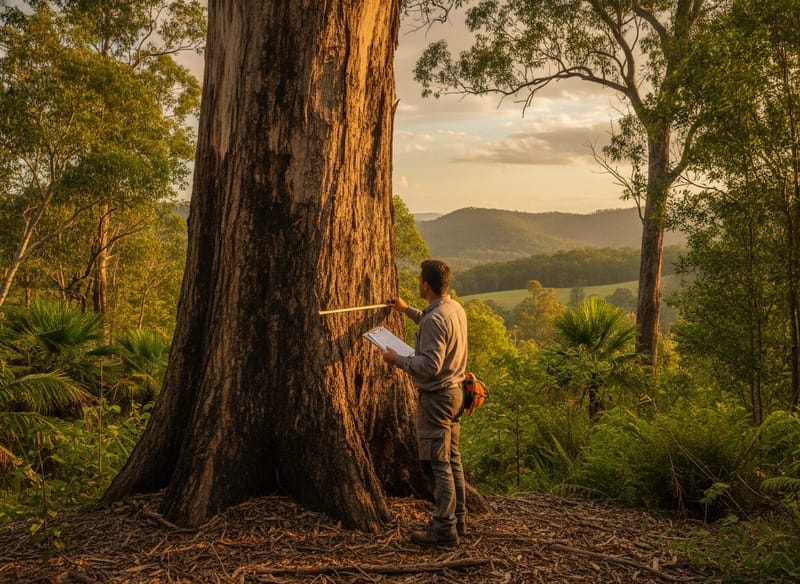
We evaluate the tree's structure, growth rate, and proximity to buildings in your Freshwater yard.
We determine whether selective reduction, crown thinning, or full removal is the safest and most cost-effective option.
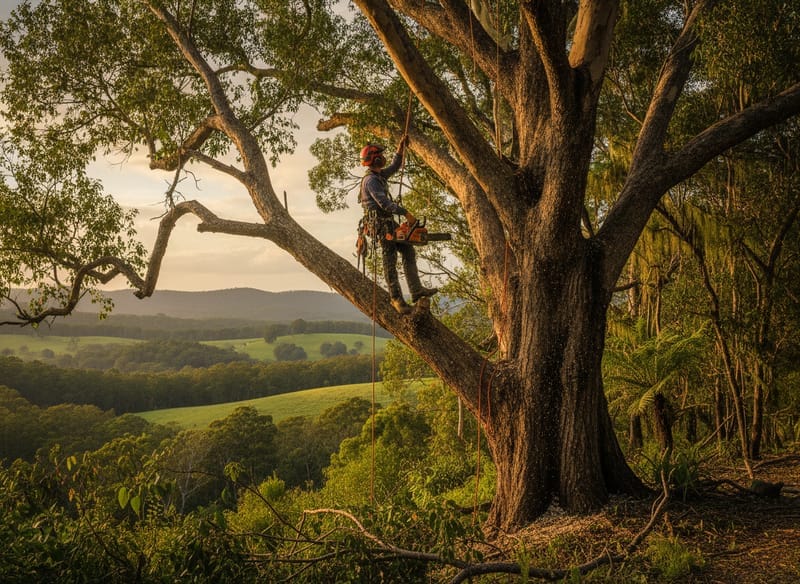
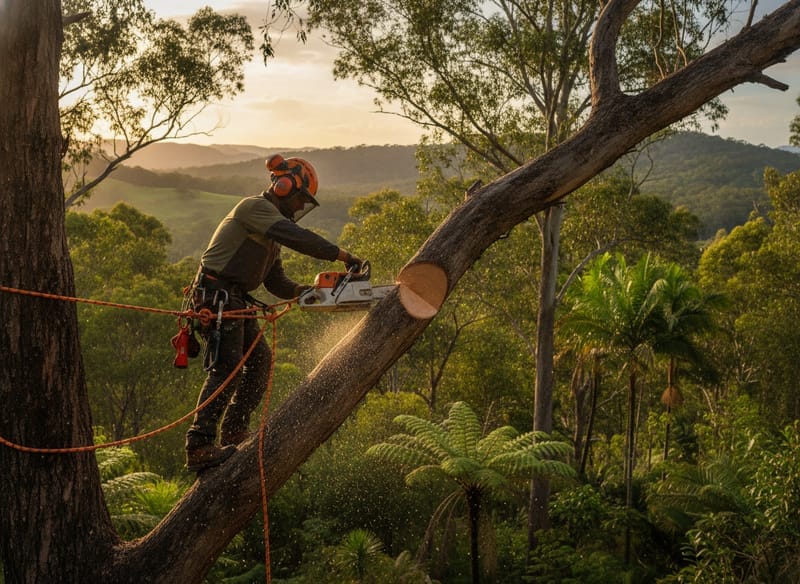
Our climbers use controlled techniques to reduce height and spread back to healthy lateral growth nodes.
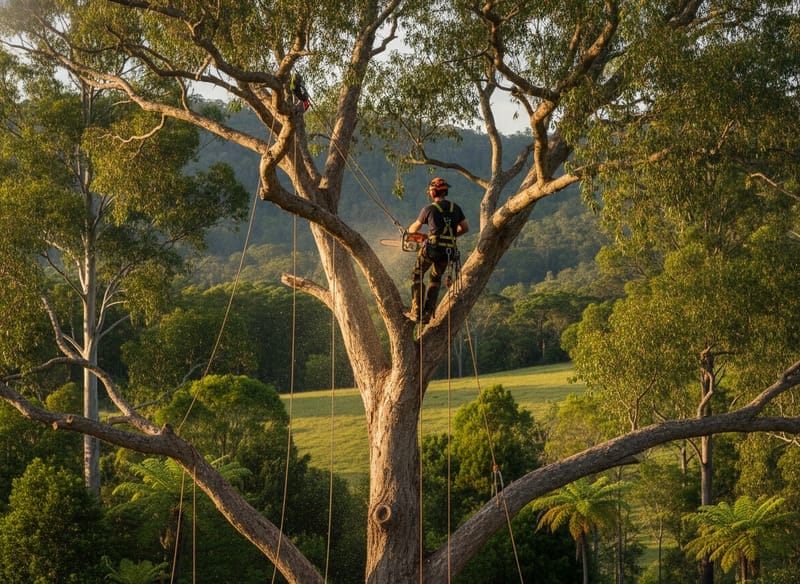
Heavy limbs are lowered safely using ropes and pulleys to avoid impact on ground fixtures.
All cut timber and foliage are chipped on site, and the entire work zone is thoroughly cleaned.
Living under the lush canopies of the Barron Valley is beautiful, but when your backyard feels completely shaded out or heavy branches start looming over your roofline, it is time to take action. If you are looking for professional Tree Lopping Freshwater, our experienced team of local arborists is ready to help manage your property's overgrown vegetation safely and correctly.
Freshwater's unique blend of established acreage properties and leafy suburban streets means that towering trees are a signature part of the local character. However, balancing that natural beauty with property safety is a constant challenge for homeowners and property managers here. In the Wet Tropics, the combination of two metres of annual rainfall and nutrient-rich soils means species like Milky Pine, Blue Quandong, and Raintree grow at an astonishing rate. What starts as a lovely shade tree can quickly become a hazard, especially as the December to April monsoon and cyclone season approaches.
Many homeowners contact us asking to 'chop the top off' or lop their trees to regain sunlight and reduce risks. However, we deliver something far better. Our climbers use advanced, standard-compliant pruning techniques to reduce the height and spread of your trees without destroying their health or structural integrity, keeping your Freshwater property safe and looking its best year-round.
When a tree outgrows its space, the temptation is often to hire an unqualified worker to just 'take the top off'. Hiring a casual worker with a chainsaw to hack away at your trees might seem cost-effective, but the long-term costs of property damage, ruined tree structure, and potential liability far outweigh the initial savings. While true tree lopping might seem like a fast fix, it actually creates far worse problems down the line. Indiscriminate lopping, or 'heading back', involves cutting large branches right through the middle, leaving exposed stubs. This practice is explicitly discouraged under Australian Standards because it forces the tree into a panic response. The tree rapidly pushes out weak, spindly epicormic shoots to replace its lost leaves. Because these new branches are only weakly attached to the outer layers of the bark rather than the solid heartwood, they are highly prone to snapping off in the next severe thunderstorm or cyclone. Furthermore, those large, open stub cuts become a direct entry point for rot and decay. Instead of harmful topping, our qualified climbers use precise canopy reduction techniques. By employing target pruning and cutting back to a strong lateral branch collar, we can significantly reduce the height and spread of your tree while preserving its natural shape and internal health. We give you the size reduction you need without turning your tree into a decaying hazard, ensuring your property is genuinely prepared for the wet season.
When you ask us to make your tree smaller, we assess the site and apply the correct AS4373-compliant technique to achieve your goals safely. Here is how we manage overgrown canopies:
The correct alternative to traditional lopping. We selectively reduce the height and spread of the canopy by cutting back to appropriate lateral branches. This controls the tree's size while maintaining structural integrity, typically removing no more than 25–30% of the live foliage in a single visit.
If lower branches are blocking your driveway, rubbing against your roof, or obstructing pedestrian access, we remove the lower limbs back to the trunk collar. This creates essential vertical clearance without needing to reduce the overall tree height.
Perfect for dense, wind-catching canopies. We selectively remove secondary branches throughout the crown to allow better light penetration and reduce wind resistance, which is critical for cyclone preparation on steep foothill blocks.
Targeted removal of specific problematic branches. Whether it is a heavy limb extending over your pool or structural faults developing in a mature Mango tree, we address the specific hazard while leaving the rest of the tree intact.
Managing large trees requires careful planning, especially on the sloping blocks and tight access streets common around the foothills of Freshwater, Redlynch, and Stratford. Here is exactly how our team handles your canopy reduction from start to finish.
First, we visit your property to assess the overgrown tree. We will discuss exactly what you want to achieve—whether that is clearing branches away from your roof, letting more light into the yard, or reducing the sail area before cyclone season. We then provide a clear, itemised quote detailing the specific AS4373 pruning methods we will use to achieve that size reduction.
On the day of the job, our climbers arrive with top-handle chainsaws and modern rope-access gear. Because many roads winding through the local foothills are narrow, we also arrange any necessary traffic management to keep the streets safe while our trucks and chippers are operating. For trees situated on steep slopes where elevating work platforms cannot reach, our AQF Level 3 arborists safely climb and dismantle the problematic sections piece by piece. We rig heavy limbs down on ropes to ensure your gardens, fences, and rooflines are completely protected from impact.
Once the canopy is reduced, our ground crew processes all the cut limbs through our large capacity wood chippers. We rake and blow down the entire work zone, packing all green waste into our tipper trucks for removal. You are left with a perfectly reduced tree and a completely tidy yard.
Every job we undertake strictly adheres to AS4373 — Pruning of Amenity Trees, ensuring the cuts we make support the long-term stability of your canopy rather than creating future hazards.
Tree work is inherently dangerous, particularly when dealing with heavy timber and heights. Our business is fully insured with comprehensive public liability cover and up-to-date WorkCover for all our employees. Our climbers hold current AQF Level 3 qualifications in arboriculture, along with working at heights, tree felling, and first aid certifications. When you hire our team, you are protected by professional, compliant practices from the moment our trucks pull up to your property.
Operating in the Barron Valley means dealing with specific environmental factors and strict local regulations. When executing Tree Lopping Freshwater, we must navigate both the rapid tropical growth and Cairns Regional Council's robust protection of the urban canopy. Under the CairnsPlan 2016, any tree over 7.5 metres tall is classified as a Significant Tree. While standard AS4373 pruning, deadwooding, and crown lifting are generally exempt from requiring a permit, severe lopping or excessive canopy removal that damages the tree constitutes assessable vegetation damage and requires a Development Permit for Operational Works. Our AQF Level 5 consulting arborists can help write the necessary reports if your tree requires major intervention. Currently, an emergency disaster clearing exemption is in place across the Cairns Disaster District following Severe Tropical Cyclone Narelle, running until March 2027. We can help you assess whether reducing your hazardous branches falls under this exemption for preventative safety before the next monsoon season hits our region.
After we have completed your canopy reduction, your tree will need a short period to recover. Ensure the soil around the structural root zone remains adequately watered, especially if the pruning was done during a dry spell before the summer monsoon arrives. Do not apply sealants or paints to the pruning cuts; under AS4373 guidelines, trees are highly effective at sealing their own wounds naturally through compartmentalisation. Keep an eye on the lower trunk for any signs of fungal brackets or unusual decay, which can occasionally emerge if the tree was already stressed prior to our visit. Because of the fast-growing Wet Tropics conditions in Cairns, canopy management is an ongoing cycle. We recommend having our arborists return every two to three years to inspect the crown, manage any new epicormic growth, and ensure the tree remains safe, healthy, and at a manageable size.
Canopy reduction and lopping-alternative pruning pricing in Freshwater is calculated based on tree dimensions, access, and timber volume.
We provide honest, fixed-price quotes with clear descriptions of all proposed reduction cuts.
We manage canopy reduction and pruning across Freshwater and adjoining Cairns suburbs.
Contact our qualified arborists for professional height and spread management across Freshwater.
Get a Free Quote