Safe Property Restoration
Eliminate secondary falling hazards and hanging limbs that threaten your family after a storm.
Post-storm cleanup, hanging branch extraction, and multi-tree clearing across Smithfield.
Restoring storm-affected properties across Smithfield.
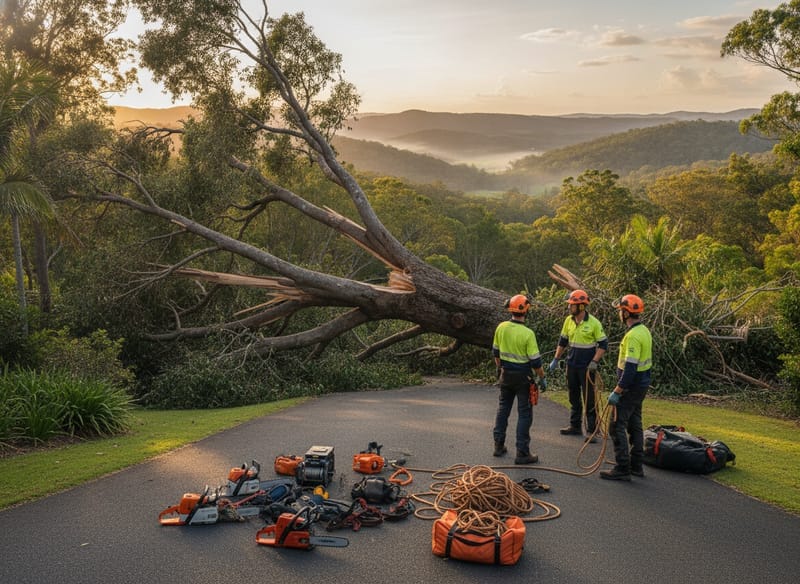
Our storm damage tree removal Smithfield service focuses on restoring order after major weather events, severe thunderstorms, and cyclones. We remove hung-up branches, extract uprooted root balls, and clear massive volumes of storm debris from yards and access ways.
Severe weather events like Tropical Cyclone Jasper and Narelle highlight Smithfield's vulnerability to saturated soils and high winds. Uprooted trees often destabilise neighbouring vegetation, requiring a full boundary assessment after a storm.
Eliminate secondary falling hazards and hanging limbs that threaten your family after a storm.
Clear, professional quotes and arborist reports make your insurance claim process smooth and hassle-free.
Remedial canopy pruning gives surviving damaged trees the best chance of healthy, structured recovery.
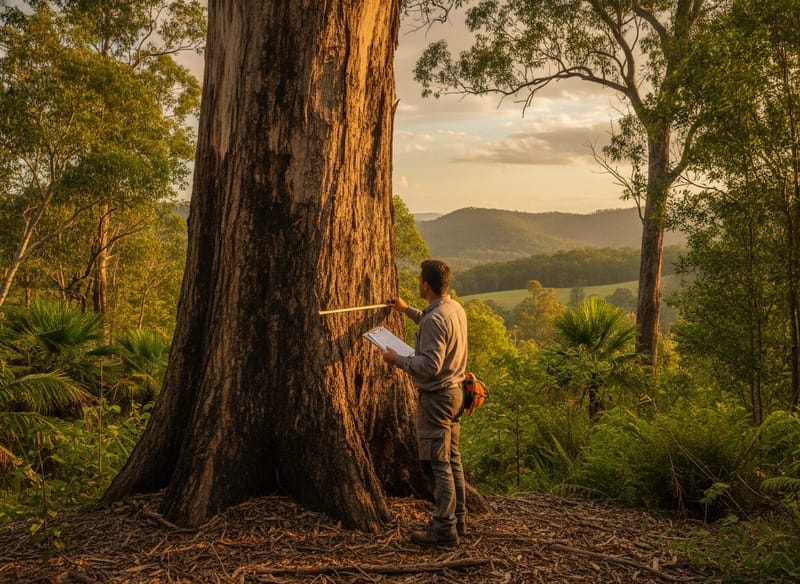
We survey the entire property to identify all damaged, hung-up, or compromised trees.
We establish a clear schedule, addressing immediate structural risks first before moving to general yard clearance.
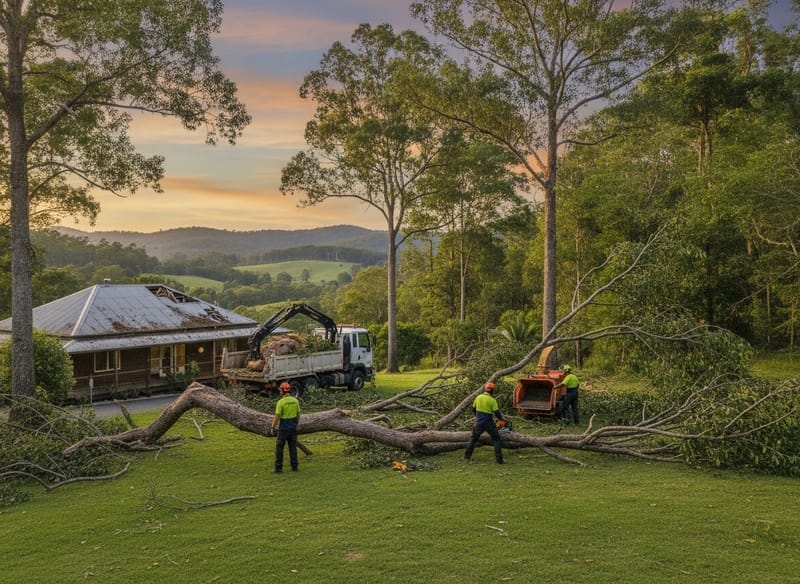
Our team cuts under-tension limbs, chips brushwood, and saws heavy trunks into manageable sections.
We rake leaves, sweep paths, and leave your property safe, orderly, and clear of debris.
The wet tropics climate brings spectacular canopy growth, but when the monsoon hits or a cyclone crosses the coast, saturated soil and cyclonic winds push trees to their breaking point. If you are dealing with fallen timber, hung-up branches, or compromised root plates after severe weather, our local team provides rapid, safe, and professional Storm Damage Tree Removal Smithfield. Whether you own a modern block under the hills of Smithfield, an acreage property out towards Caravonica, or a commercial site on the Northern Beaches, storm cells here do not discriminate. When an African Tulip or Milky Pine goes over in a gale, or a massive Mango limb tears out, it is not just a mess—it is an immediate hazard to property, powerlines, and your family. We are the experienced arborists you need on site to make things safe, clear the wreckage, and get your property back to normal.
After a massive blow, the urge to fire up the chainsaw and clear the driveway is strong. However, dealing with storm-damaged trees is incredibly dangerous and entirely different from standard felling. Uprooted root plates can violently spring back into place once the weight of the trunk is cut. Hung-up limbs in the canopy are under massive, unpredictable tension, and cutting the wrong branch can trigger a lethal barber-chair split or drop tonnes of timber without warning.
Calling unqualified operators or attempting it yourself often results in deeper property damage or serious injury. Furthermore, botched cleanups can void your insurance claims if evidence is not correctly documented before the cutting begins.
Our team provides a genuine arborist solution for Storm Damage Tree Removal Smithfield. We secure the site, isolate the hazards, and use proper rigging and dismantling techniques to remove the danger without destroying what is left of your landscaping. We follow AS4373 pruning standards where a tree can be salvaged—never lopping or topping—ensuring that any retained canopy will not just rot and fail in the next wet season. We give you a complete, professionally documented assessment that makes dealing with your insurer straightforward.
When we arrive at a storm-ravaged site, we do not just start cutting blind. We deploy a systematic, highly technical approach using heavy-duty arborist equipment to ensure absolute safety and efficiency for your property.
We walk the property to tag hazards by priority, addressing immediate threats over houses, driveways, or powerlines first. This ensures our crews are never operating beneath unassessed, hung-up limbs.
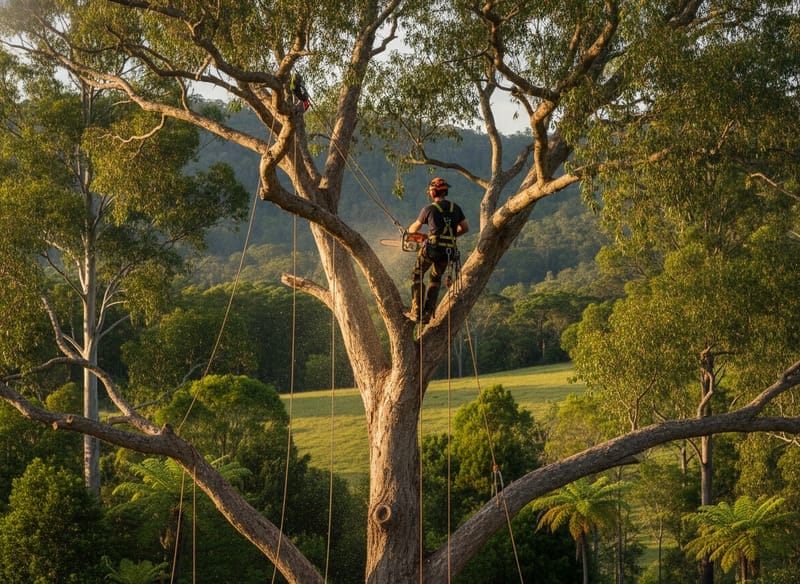
Using professional-grade top-handle chainsaws and high-capacity ground saws, our climbers carefully relieve the extreme tension in twisted, fallen timber to prevent sudden snap-back and dangerous timber splitting.
For large Milky Pines or Weeping Figs that have fallen onto structures or are inaccessible to heavy machinery, we utilise crane lifts. This allows us to lift multi-tonne sections of timber vertically off your roof without causing secondary damage.
Fallen trees often leave massive, dangerous root plates exposed. We safely sever the trunk while controlling the stump's return to the ground, preventing it from standing back up and crushing fences or operators.
All cleared timber and brush is processed on-site using our high-capacity 12-inch wood chippers, turning storm debris into manageable mulch while our tipper trucks haul away the massive logs.
When you call us for emergency make-safe or post-storm clearing, our process is built around speed, safety, and thorough documentation. We know that after a major event like Cyclone Jasper or Narelle, getting your property secure is the absolute priority. First, we conduct an immediate site inspection. We assess the stability of the damaged trees, identify any live powerline risks, and take comprehensive pre-work photographs. This documentation is critical for your insurance claim. We then provide a detailed quote that breaks down the scope line by line, ensuring your insurer knows exactly what is being charged for emergency hazard reduction versus standard aesthetic cleanup. Once approved, our climbers and ground crew mobilise. We execute the make-safe work first—rigging down dangerous limbs suspended over your roof or driveway. After the immediate threats are neutralised, we systematically dismantle the rest of the fallen or condemned tree using advanced rigging techniques and heavy machinery. Finally, we run the debris through our chippers, load the heavy logs onto our tipper trucks, and rake the site clean. We leave your property safe, accessible, and ready for any secondary building repairs you might need.
Storm work is high-risk, which is why compliance and safety are non-negotiable. Our crews are led by AQF Level 3 climbing arborists who hold all necessary tickets, including Working at Heights, EWP, and advanced tree felling units. Where a tree's structural integrity needs a formal risk assessment for council or insurance, our AQF Level 5 consulting arborist can provide the necessary reporting.
We are fully public liability insured and carry comprehensive WorkCover for our team. All salvageable trees are treated strictly in accordance with AS4373 (Pruning of Amenity Trees), ensuring we never resort to damaging lopping practices. We also manage all traffic control requirements if your damaged street trees have spilled over onto public roads.
Smithfield sits right at the intersection of steep rainforest hillsides and the coastal plain, exposing it to both fierce cyclone winds and extreme wet season rainfall. This combination frequently causes whole-tree failures in species like African Tulip and Cadaghi, while massive limbs easily tear from Weeping Figs and Mango trees under intense cyclonic wind load. The Cairns Regional Council (CairnsPlan 2016) heavily regulates vegetation across the city, defining a Significant Tree as anything over 7.5 metres tall. Normally, you need a Development Permit for Operational Works (Vegetation Clearing) to touch them. However, dangerous trees have a narrow exemption if the risk to life or infrastructure is imminent. Furthermore, following severe events like Cyclone Narelle, state disaster clearing exemptions may apply, allowing removal of fallen woody debris. We understand these local planning overlays perfectly. We provide the photographic evidence and arborist justification required to prove the work was an emergency, keeping you fully compliant with Council regulations.
Once the storm debris is cleared, the remaining trees on your property will be highly stressed. The sudden loss of neighbouring canopy can expose previously sheltered trees to new wind loads, significantly increasing their risk of future failure.
We highly recommend keeping the mulch we process on-site to help retain soil moisture and rebuild the root systems of your surviving trees. Over the next six to twelve months, monitor your retained trees for signs of dieback, unusual leaning, or aggressive epicormic shoots.
Give us a call before the next wet season to conduct a formative prune on these recovering trees, ensuring they rebuild a structurally sound canopy that can withstand the next major Cairns weather event.
Storm damage cleanup costs in Smithfield depend on the volume of fallen timber and the hazards involved.
We provide detailed, itemised quotes outlining all make-safe and cleanup costs.
We provide storm damage tree removal services across Smithfield and neighbouring areas:
Contact our local team to safely clear fallen trees, broken canopies, and storm debris.
Get a Free Quote