Safe Height Reduction
Achieve necessary clearances from structures and overhead cables without causing tree decay.
Professional height reduction, selective canopy pruning, and safe alternatives to destructive tree topping in Smithfield.
Managing overgrown and out-of-control trees across Smithfield.
Property owners searching for tree lopping Smithfield typically want one thing: an overgrown tree reduced in height or bulk to protect their home. We deliver targeted canopy reductions and selective pruning that achieve your height and clearance goals while preserving the tree's structural integrity.
Fast-growing trees in Smithfield like Raintree, Poinciana, and Cadaghi react aggressively to severe topping. In our wet tropical climate, flush-topped trees rot rapidly at the cut sites, creating severe liability issues within two to three seasons.
Achieve necessary clearances from structures and overhead cables without causing tree decay.
Proper reduction cuts require less frequent repeat maintenance than the rapid, messy regrowth caused by traditional lopping.
Maintain an attractive, balanced tree profile rather than leaving ugly, bare branch stubs.
We discuss what you want to achieve (more light, roof clearance, lower height) and inspect the tree species.
We recommend an AS 4373 crown reduction or directional prune that achieves your objective safely.
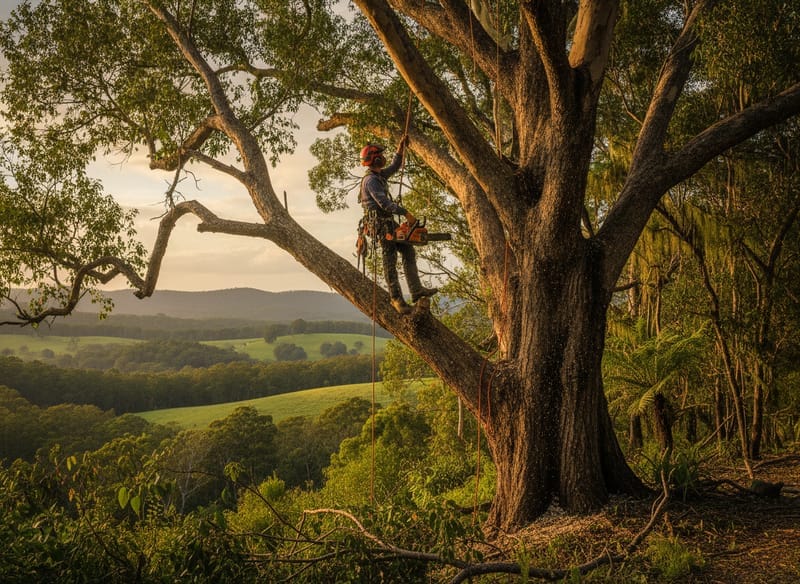
Our climbing arborists prune back to suitable lateral branches that can sustain the remaining foliage.
All cut timber and heavy green waste are processed through our chipper, leaving your yard clean.
As the wet season approaches and the monsoon builds over the mountains, managing the size and spread of your canopy becomes a priority. If you are looking for professional Tree Lopping Smithfield, Cairns Arborist is your local, hands-on team. We service the steep foothill blocks, the sandy soils near the beaches, and the established acreage properties right across the Northern Beaches corridor. When Smithfield homeowners call us for tree lopping, they usually mean one thing: the tree has simply grown too large for its location, is hanging over the roofline, or blocking out the natural light. In our wet tropics climate, with two metres of annual rain and fast growth rates, large canopy species like Raintrees, Mangos, and invasive African Tulips quickly dominate a yard. Our climbers and trucks are here to physically reduce that canopy, giving you back your space while ensuring the tree survives the storm season safely. We assess exactly what you want to achieve and apply the correct horticultural methods to get the size down without destroying the health of your asset.
There is a distinct difference between professional size reduction and brutal, unqualified tree lopping. When an untrained operator simply hacks the top off a mature Blue Quandong or Weeping Fig, they create a massive structural problem. This practice, often called "topping" or "heading back," leaves large, jagged stubs that are highly susceptible to rot in our humid, tropical environment. Worse still, the tree responds to the trauma by rapidly pushing out weak, fast-growing epicormic shoots. These new branches have a poor structural attachment to the decaying stub. When a severe thunderstorm or cyclone hits the Cairns coast, these weak attachments are the first to snap, causing significant property damage and safety risks. That is why our team strictly follows the AS4373 Pruning of Amenity Trees standard. When you ask us to reduce the size of your tree, we do not indiscriminately hack branches. Instead, we use targeted crown reduction and selective pruning. We carefully select growth nodes and branch collars to make clean cuts, allowing the tree to heal properly. You still get the smaller, safer tree you asked for, but without the rot, the dangerous regrowth, and the eventual need for a complete, costly removal down the track.
While "tree lopping" is the phrase most locals use to describe making a tree smaller, our arborists employ specific, AS4373-compliant techniques to achieve that goal safely on your Smithfield property.
We carefully reduce the overall height and spread of large canopy trees like Golden Penda or Mango. By cutting back to a secondary branch that is at least one-third the diameter of the removed limb, we maintain the tree's natural shape while significantly decreasing its wind resistance.
Perfect for clearing driveways, fence lines, and pedestrian access. We systematically remove the lowest branches back to the trunk collar, lifting the canopy to provide clear, safe access beneath the tree without compromising its upper structure.
For dense species that block natural light or catch too much cyclone wind, we selectively remove secondary branches throughout the canopy. This reduces the weight and "sail area" of the tree while keeping its external size and shape intact.
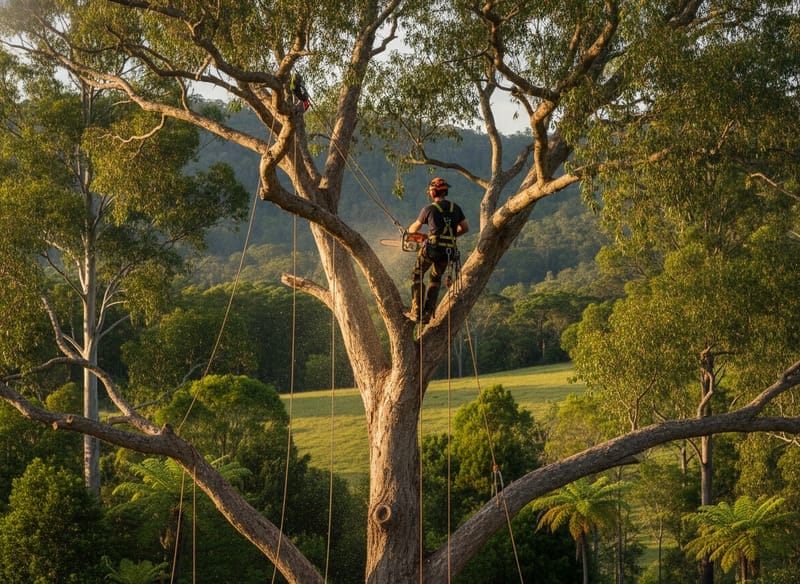
If a specific limb of a Milky Pine or Raintree is overhanging your roof, pool, or powerlines, we target just that problem branch. We employ rope-access techniques to safely lower the limb section by section, ensuring zero damage to your property below.
Following a severe weather event, we provide immediate, heavy reduction of structurally compromised trees. While more aggressive than standard pruning, this is necessary to stabilize storm-damaged timber and prevent further collapse.
Our approach to every job is methodical, ensuring safe operations on tight residential blocks and steep hinterland acreage alike. Here is exactly how we deliver professional size reduction for your trees.
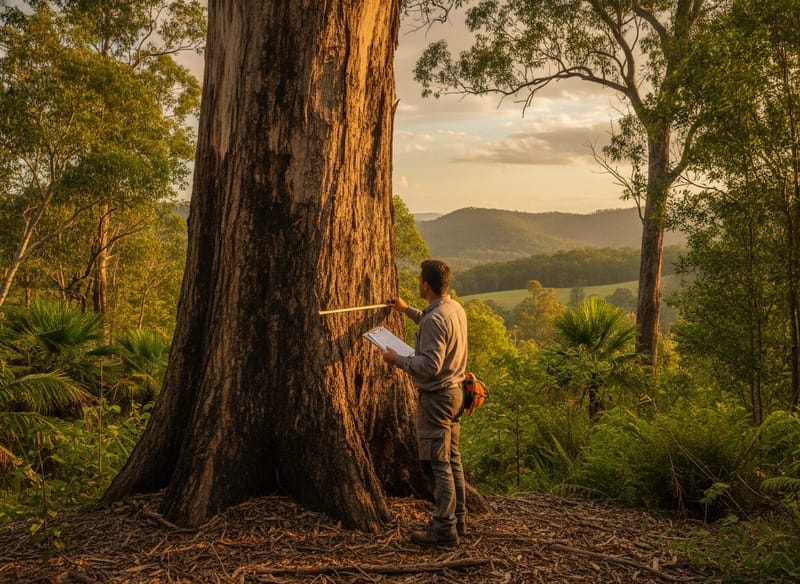
Site Assessment and Strategy We start with an on-site consultation. One of our qualified arborists will inspect the tree, note any structural defects, and discuss your goals. We then determine the best AS4373-compliant method to achieve the size reduction you need without destroying the tree's health.
Safe Access and Rigging On the day of the job, our climbers map out an access plan. For flat properties with good access, we may utilize our Elevating Work Platforms (EWPs). For steep Smithfield hill blocks or trees locked behind tight side boundaries, our crew uses advanced double-rope climbing techniques and specialized rigging gear.
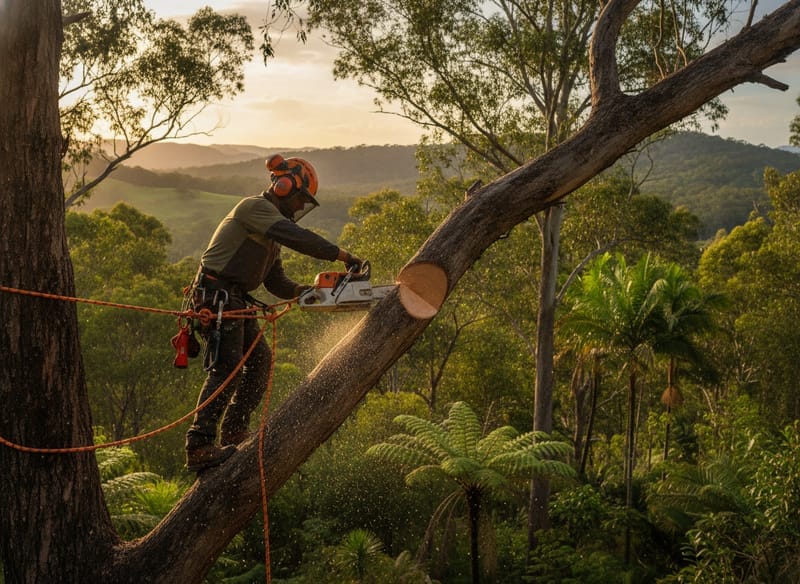
Targeted Cutting We dismantle the overextended limbs piece by piece using top-handle climbing saws. Heavy timber hanging over your roof or pool is slung and lowered to the ground under complete control by our ground crew.
Processing and Cleanup Once the limbs are safely down, we process the foliage through our high-capacity wood chippers, turning it into valuable mulch. The heavy logs are loaded onto our tipper trucks. Before we leave, we rake and sweep the site, leaving your yard cleaner than we found it.
Every job we undertake is fully insured for public liability and backed by comprehensive WorkCover for our crew. We do not compromise on safety. Our on-site climbing arborists hold AQF Level 3 qualifications, ensuring they are trained in advanced aerial rescue, rigging, and chainsaw operation.
If your project requires formal council approval or a detailed risk assessment, our AQF Level 5 consulting arborists provide the necessary documentation. Furthermore, our pruning operations are strictly governed by AS4373 – Pruning of Amenity Trees, guaranteeing that our cuts promote tree health rather than decay. Our equipment operators also carry current Working at Heights and EWP tickets for fully compliant site management.
Operating in Smithfield means dealing with the extremes of the wet tropics. From November to April, the combination of saturated soils and cyclonic winds makes top-heavy trees a serious liability. Reducing the sail area of towering Milky Pines or over-extended Mango trees is critical pre-season maintenance.
However, the Cairns Regional Council strictly regulates vegetation under the CairnsPlan 2016. Any tree over 7.5 metres tall is classified as a Significant Tree, and assessable damage requires a Development Permit for Operational Works (Vegetation Clearing). Fortunately, routine maintenance such as hazardous limb removal, crown lifting, and formative pruning is generally exempt, provided it strictly follows AS4373 standards.
We also navigate the current disaster clearing exemptions from Severe Tropical Cyclone Narelle, which allow for the removal of fallen trees and woody debris to maintain infrastructure until March 2027. We handle the documentation and compliance, ensuring your property remains safe and on the right side of local council bylaws.
Once we have successfully reduced your tree, proper aftercare will ensure it recovers quickly. We recommend leaving the fresh mulch we produce around the tree's structural root zone to retain moisture and regulate soil temperature in the tropical heat. Keep the mulch pulled slightly back from the trunk to prevent collar rot. Monitor the tree over the wet season. You should see a healthy, evenly distributed flush of new foliage rather than panicked, cluster growth. Depending on the species—particularly fast-growing invasives like African Tulip or heavy canopy species like Raintree—we recommend booking our team for a structural inspection and maintenance prune every two to three years to keep the canopy safely in check.
Canopy reduction and lopping alternative costs in Smithfield depend on the scale of reduction required.
We provide clear quotes explaining exactly how we will reshape the tree to meet your needs.
We service residential and commercial properties for canopy reductions across Smithfield and nearby areas:
Get professional advice on safe canopy reduction and height management.
Get a Free Quote